Table of Contents
ToggleReading and literacy development trends in 2026 will reshape how children and adults learn to read. Schools, educators, and parents are preparing for significant shifts in teaching methods, technology use, and early intervention strategies. These changes reflect years of research, policy updates, and lessons learned from recent educational challenges.
This year marks a turning point. Artificial intelligence is entering classrooms at scale. States are adopting evidence-based reading curricula faster than ever. Digital literacy has become a core skill, not an elective topic. And early childhood programs are receiving renewed attention and funding.
Understanding these reading and literacy development trends helps educators stay ahead. It also helps families make informed decisions about their children’s education. Here’s what the research and expert projections say about 2026.
Key Takeaways
- AI-powered reading tools are transforming literacy instruction in 2026, with 78% of U.S. elementary schools expected to adopt AI-assisted literacy software by year’s end.
- Over 40 states have passed legislation requiring evidence-based science of reading instruction, marking a major shift from balanced literacy approaches.
- Digital literacy skills—including evaluating online sources and identifying misinformation—are now essential components of reading and literacy development trends.
- Early childhood literacy interventions are receiving increased federal funding, with $2.3 billion allocated for pre-K reading initiatives in 2025.
- Reading and literacy development trends in 2026 emphasize that foundational literacy begins at birth, with early screening and home visiting programs expanding nationwide.
- Parents can support these shifts by asking schools about AI reading programs, reinforcing digital literacy at home, and reading aloud to children from an early age.
The Rise of AI-Powered Personalized Learning
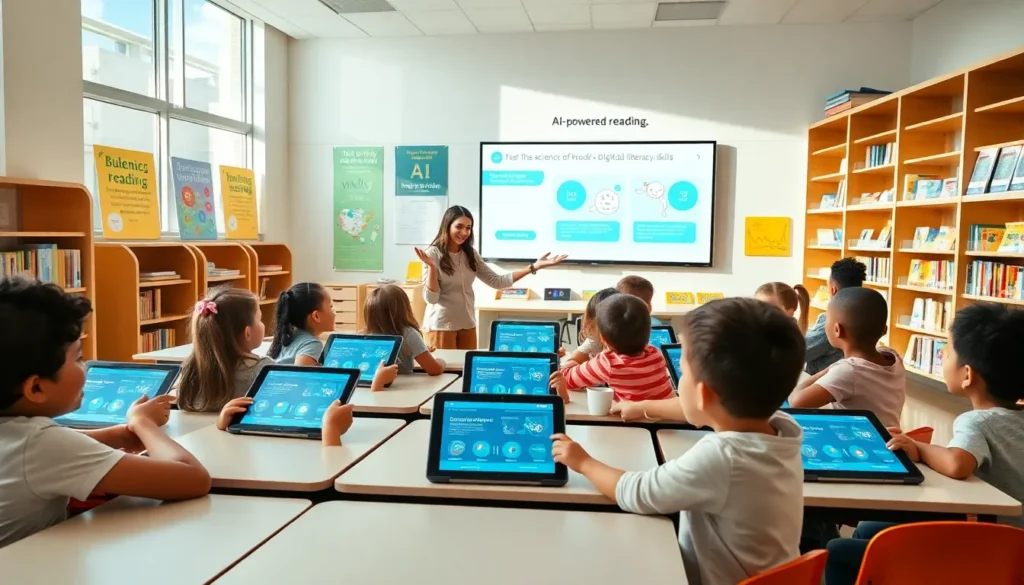
AI-powered reading tools are changing literacy instruction in 2026. These platforms analyze student performance in real time. They adjust lesson difficulty, pacing, and content based on individual progress.
Schools across the U.S. are adopting AI reading assistants at record rates. A 2025 EdTech survey found that 62% of elementary schools now use some form of AI-assisted literacy software. That number is expected to climb to 78% by the end of 2026.
What makes AI different from previous educational technology? Precision. Traditional programs offered the same lessons to every student. AI systems identify specific skill gaps, phonemic awareness, fluency, vocabulary, and target them directly.
Teachers report mixed but mostly positive experiences. Many appreciate the detailed data these tools provide. They can see exactly where a student struggles and intervene faster. Others worry about screen time and the loss of human connection in reading instruction.
The reading and literacy development trends around AI also raise equity questions. Schools with larger budgets can afford premium platforms. Under-resourced districts may fall further behind. Policymakers are discussing ways to close this gap, including federal grants for AI literacy tools.
Parents should ask their children’s schools about AI reading programs. Understanding what tools are in use helps families support learning at home.
Science of Reading Implementation Continues to Expand
The science of reading movement has gained significant ground. By 2026, over 40 states have passed legislation requiring evidence-based reading instruction. This represents a major shift from the balanced literacy approach that dominated for decades.
What exactly is the science of reading? It’s a body of research spanning cognitive psychology, linguistics, and neuroscience. This research shows that systematic phonics instruction helps most children learn to read. It emphasizes five pillars: phonemic awareness, phonics, fluency, vocabulary, and comprehension.
Teacher training programs are updating their curricula. New teachers entering the profession in 2026 receive explicit instruction in structured literacy methods. Veteran teachers are attending professional development sessions to update their skills.
The results are promising. States that adopted science of reading curricula early, like Mississippi, have seen measurable gains in fourth-grade reading scores. Other states are watching closely and following suit.
Reading and literacy development trends in 2026 show that implementation remains uneven, but. Some districts embraced the change enthusiastically. Others face resistance from educators trained in different methods. Curriculum materials also vary in quality.
Publishers have responded by creating new phonics-based programs. Schools must evaluate these materials carefully. Not every product labeled “science of reading” actually aligns with the research.
This shift represents one of the most significant changes in literacy education in a generation.
Digital Literacy Skills Take Center Stage
Reading in 2026 means more than decoding printed words. Students must also evaluate online sources, identify misinformation, and read across multiple digital formats. These digital literacy skills have become essential.
Schools are integrating digital literacy into reading instruction. Students learn to question sources, check facts, and understand how algorithms shape what they see online. These skills protect them from manipulation and prepare them for modern citizenship.
Research from Stanford University shows that most students struggle to evaluate online information. A 2024 study found that 82% of middle schoolers couldn’t distinguish between news articles and sponsored content. This gap has made digital literacy a priority.
Reading and literacy development trends now include multimodal literacy. Students read text, images, videos, and interactive content together. They learn to synthesize information from different formats, a skill traditional reading instruction didn’t address.
Librarians have become key players in this shift. They teach research skills and help students find credible sources. Many schools are expanding library programs and hiring additional staff.
Parents can reinforce digital literacy at home. Discussing news sources at dinner, asking children how they know something is true, and modeling critical thinking all help.
The definition of literacy has expanded. Reading and literacy development trends in 2026 reflect this broader understanding.
Early Childhood Literacy Interventions Gain Momentum
Early intervention works. Research consistently shows that children who receive literacy support before kindergarten perform better throughout their school years. In 2026, policymakers and educators are acting on this evidence.
Federal and state funding for pre-K literacy programs has increased. The 2025 education budget included $2.3 billion for early childhood reading initiatives. Many states are matching these funds with their own investments.
These programs focus on building foundational skills. Children learn letter recognition, phonemic awareness, and vocabulary through play-based activities. They hear books read aloud daily. They practice rhyming, singing, and storytelling.
Home visiting programs have expanded as well. Trained literacy specialists visit families with young children. They model reading techniques and provide books for home libraries. Research shows these visits improve reading outcomes, especially for children from low-income households.
Pediatric practices are joining the effort. The Reach Out and Read program now operates in over 6,000 clinics nationwide. Doctors prescribe books during well-child visits and encourage parents to read aloud.
Reading and literacy development trends show growing recognition that literacy begins at birth. The first five years shape a child’s brain and build the foundation for later reading success.
Schools are also screening students earlier. Many districts now assess literacy skills at kindergarten entry. This allows teachers to identify struggling readers immediately and provide targeted support.