Table of Contents
ToggleReading and literacy development for beginners starts earlier than most people think. Children begin building foundational skills from infancy, long before they recognize their first word. This guide breaks down how early literacy develops, the stages readers move through, and practical ways to support young learners. Whether someone is a parent, teacher, or caregiver, understanding these concepts helps create confident, capable readers.
Key Takeaways
- Reading and literacy development for beginners starts in infancy, with foundational skills like phonological awareness and vocabulary building emerging in the first five years.
- Children progress through five key reading stages—from pre-reading to reading to learn—each building on skills from the previous phase.
- Reading aloud for just 15 minutes daily significantly boosts vocabulary, comprehension, and overall literacy development.
- Explicit phonics instruction, interactive reading, and print-rich environments accelerate progress for beginner readers.
- Common challenges like limited vocabulary, low motivation, or learning differences can be overcome with targeted strategies and consistent daily practice.
- Patience and encouragement are essential—celebrate effort and improvement to build confident, resilient readers.
Understanding Early Literacy Skills
Early literacy skills form the building blocks for reading and literacy development. These skills emerge in the first five years of life and set the stage for future success.
Phonological awareness is one of the most important early skills. It refers to a child’s ability to hear and identify sounds in spoken language. Children who can recognize rhymes, clap syllables, and identify beginning sounds have stronger phonological awareness.
Print awareness develops when children understand that written words carry meaning. They learn that books are read from left to right and top to bottom. They notice words on signs, labels, and screens.
Vocabulary plays a critical role in reading and literacy development for beginners. The more words children hear and use, the easier reading becomes later. Research shows that children who hear 30 million words by age three often outperform peers in reading by third grade.
Narrative skills help children understand and tell stories. When kids can describe events in order and predict what happens next, they build comprehension abilities.
Letter knowledge includes recognizing letters and understanding that each letter has a name and sound. Children don’t need to master all 26 letters before learning to read, but familiarity helps.
These early literacy skills don’t develop in isolation. Talking, singing, reading aloud, and playing with language all contribute to growth. Parents and caregivers who engage children in conversation build these skills naturally every day.
Key Stages of Reading Development
Reading and literacy development follows a predictable path, though children move through stages at different speeds.
Pre-Reading Stage (Birth to Age 5)
During this stage, children explore books as objects. They flip pages, look at pictures, and pretend to read. They learn that print represents spoken words. Most children in this stage recognize a few familiar words like their name or common logos.
Emergent Reading Stage (Ages 5-6)
Children begin connecting letters to sounds. They sound out simple words and use pictures for clues. Reading feels effortful at this point. Kids might read word by word, pointing with their finger. This stage marks a major milestone in reading and literacy development for beginners.
Early Fluency Stage (Ages 6-7)
Readers start recognizing common words automatically. They read simple sentences with less effort. Comprehension improves because children spend less energy decoding individual words. They begin self-correcting mistakes.
Fluency Stage (Ages 7-9)
Children read smoothly with expression. They tackle longer texts and chapter books. Reading shifts from learning to read toward reading to learn. Vocabulary expands rapidly through exposure to new texts.
Reading to Learn Stage (Ages 9+)
Readers use literacy skills to gain knowledge across subjects. They understand complex sentence structures and infer meaning from context. Reading and literacy development continues throughout life, but foundational skills established early make this stage possible.
Every child progresses differently. Some move quickly between stages while others need more time and support.
Effective Strategies to Support Beginner Readers
Supporting reading and literacy development requires consistent, intentional practice. These strategies work for parents, teachers, and caregivers.
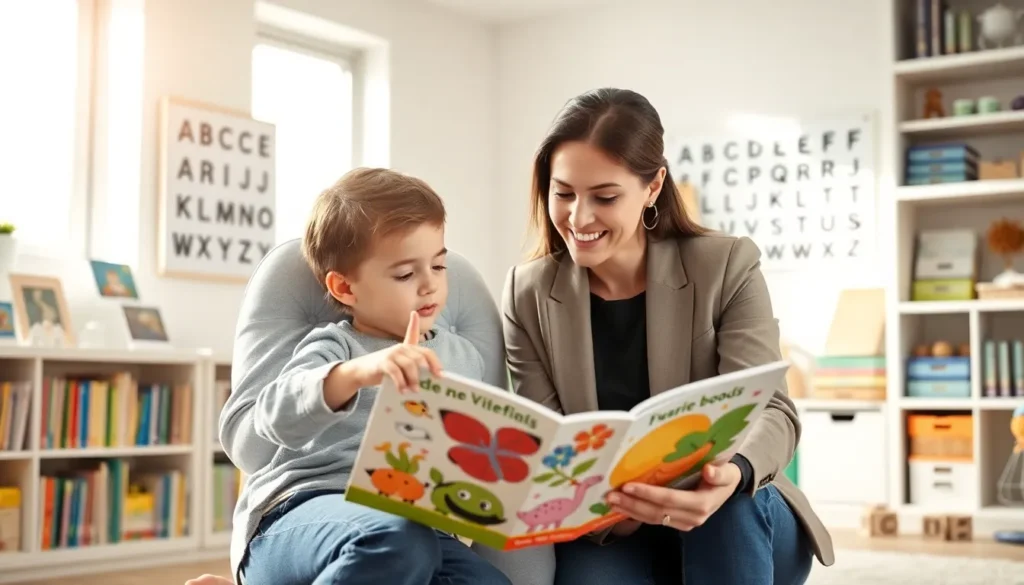
Read aloud daily. Reading to children exposes them to vocabulary, sentence structure, and storytelling patterns. Even 15 minutes a day makes a measurable difference. Ask questions during reading to boost comprehension.
Make reading interactive. Point to words as you read them. Ask children to find specific letters or words on the page. Let them turn pages and hold the book. Active participation increases engagement.
Practice phonics explicitly. Teach letter-sound relationships directly. Start with common consonants and short vowels. Use games, songs, and activities to reinforce learning. Phonics instruction accelerates reading and literacy development for beginners.
Build vocabulary through conversation. Talk about everything, meals, errands, feelings, observations. Use varied vocabulary and explain new words. Children learn most words through everyday speech, not formal instruction.
Create a print-rich environment. Label items around the home or classroom. Display alphabet charts. Keep books accessible at the child’s level. Surround beginners with opportunities to see and interact with text.
Let children choose books. Interest drives motivation. When kids pick books about topics they love, they want to read more. A child obsessed with dinosaurs will work harder to decode a dinosaur book.
Celebrate progress, not perfection. Praise effort and improvement. Reading and literacy development takes time. Encouragement builds confidence, which keeps children trying.
Common Challenges and How to Overcome Them
Many beginners face obstacles during reading and literacy development. Recognizing these challenges early leads to better outcomes.
Difficulty with phonemic awareness affects some children. They struggle to hear individual sounds within words. Targeted practice helps, clapping out syllables, playing rhyming games, and isolating beginning sounds build this skill over time.
Limited vocabulary creates comprehension problems. A child might decode words correctly but not understand their meaning. Regular read-alouds, rich conversations, and exposure to varied texts expand vocabulary gradually.
Lack of motivation stops progress for some beginners. Reading feels hard, so they avoid it. Finding high-interest books at the right level reignites enthusiasm. Graphic novels, joke books, and magazines all count as reading.
Attention difficulties make sustained reading challenging. Short reading sessions work better than long ones. Movement breaks between activities help. Some children focus better when listening to audiobooks while following along in print.
Learning differences like dyslexia affect reading and literacy development for many children. Early screening identifies these differences. Specialized instruction using multisensory approaches, combining visual, auditory, and hands-on learning, helps students with dyslexia succeed.
Inconsistent practice slows growth. Children who read only at school miss valuable repetition. Creating home reading routines ensures regular practice. Even five minutes of daily reading maintains momentum.
Patience matters. Reading and literacy development rarely follows a straight line. Children progress, plateau, and progress again. Consistent support through challenges builds resilient readers.