Table of Contents
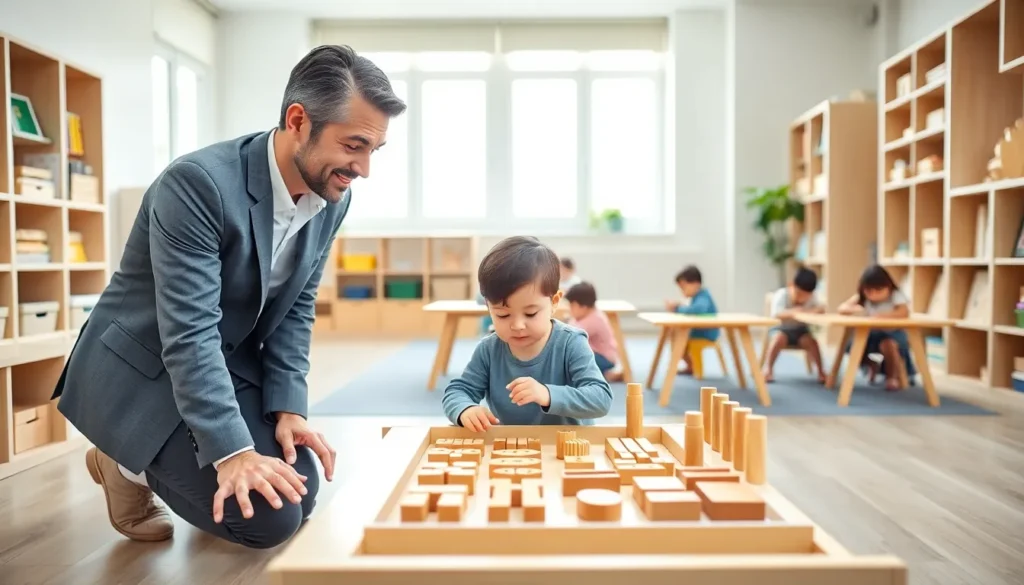
ToggleA Montessori guide plays a central role in shaping how children learn, grow, and explore their environment. Unlike traditional teachers who lead from the front, these educators step back and let curiosity take the wheel. They observe, support, and gently direct, but never dictate.
The Montessori method has gained global recognition for its child-centered approach. Parents and educators alike turn to it for its emphasis on independence, hands-on learning, and respect for each child’s pace. But what exactly does a Montessori guide do? And how does this role differ from conventional teaching?
This article breaks down the responsibilities of a Montessori guide, the core principles behind the method, training requirements, and tips for choosing the right program. Whether someone is considering Montessori education for their child or pursuing a career in this field, the information ahead offers clarity and direction.
Key Takeaways
- A Montessori guide facilitates learning by observing, preparing the environment, and allowing children to explore through self-directed activity.
- Core Montessori principles include respect for the child, self-directed learning, mixed-age classrooms, and hands-on materials.
- Montessori guides support cognitive, social, emotional, and physical development by focusing on the whole child rather than rigid instruction.
- Becoming a certified Montessori guide requires specialized training from accredited organizations like AMI, AMS, or MACTE-recognized programs.
- When choosing a Montessori program, verify the guide’s credentials, check for accreditation, and look for authentic practices like mixed-age groupings and long work periods.
- The ultimate goal of a Montessori guide is to foster independence, intrinsic motivation, and confidence in every child.
What Is a Montessori Guide?
A Montessori guide is an educator trained to help learning rather than deliver instruction. The term “guide” reflects the philosophy behind the role: these professionals don’t lecture or control. Instead, they prepare the environment, introduce materials, and allow children to learn through self-directed activity.
Dr. Maria Montessori, who developed the method in the early 1900s, believed children are naturally curious. A Montessori guide taps into that curiosity. They watch each child closely, identify interests, and present lessons that match the child’s developmental stage.
In a Montessori classroom, the guide serves several functions:
- Observer: They monitor behavior, note progress, and identify when a child is ready for new challenges.
- Connector: They link children with appropriate materials and activities.
- Model: They demonstrate respect, patience, and concentration through their own actions.
- Environment Preparer: They organize the classroom so children can access materials independently.
The Montessori guide does not grade, lecture, or assign assignments in the traditional sense. Their goal is to spark internal motivation. Children learn because they want to, not because they’re told to.
This approach requires trust. A Montessori guide trusts each child to make choices and learn from outcomes. That trust, combined with a well-prepared environment, creates the foundation for genuine learning.
Core Principles of the Montessori Method
The Montessori method rests on a few key principles. Understanding these helps clarify why a Montessori guide operates so differently from a conventional teacher.
Respect for the Child
Montessori education treats children as capable individuals. A Montessori guide speaks to children with respect, gives them real choices, and honors their pace of development. This respect builds confidence and self-worth.
The Prepared Environment
Classrooms are designed with intention. Materials sit on low shelves within reach. Each item has a specific purpose. A Montessori guide arranges the space to encourage independence and exploration. Children move freely, select their own work, and return materials when finished.
Self-Directed Learning
Children choose their activities based on interest. A Montessori guide introduces options but doesn’t force participation. This freedom fosters intrinsic motivation. Kids develop concentration because they engage with work that genuinely interests them.
Mixed-Age Classrooms
Montessori classrooms typically group children across a three-year age span. Younger children learn from older peers. Older children reinforce their knowledge by teaching. A Montessori guide facilitates this dynamic without imposing hierarchy.
Hands-On Materials
Montessori materials are tactile and self-correcting. Children learn math, language, and science through physical manipulation. A Montessori guide demonstrates how to use each material, then steps back. The child discovers concepts through direct experience.
These principles work together. They create an environment where a Montessori guide can do less talking and more observing, while children do the real work of learning.
How Montessori Guides Support Child Development
A Montessori guide supports development across multiple areas: cognitive, social, emotional, and physical. Their approach differs from traditional instruction because it focuses on the whole child.
Cognitive Growth
By presenting lessons individually and allowing repeated practice, a Montessori guide helps children master concepts at their own speed. There’s no pressure to keep up with a class. A child who needs more time gets it. A child ready to advance moves forward.
Social Skills
Mixed-age settings create natural opportunities for collaboration. A Montessori guide encourages children to resolve conflicts, share materials, and work together. These skills transfer outside the classroom.
Emotional Regulation
Montessori classrooms emphasize grace and courtesy. A Montessori guide models calm behavior and teaches children how to express feelings appropriately. The structure of the environment, predictable routines, accessible materials, also reduces anxiety.
Physical Coordination
Many Montessori activities develop fine motor skills. Pouring, buttoning, cutting, and writing all build hand-eye coordination. A Montessori guide introduces these practical life exercises early, which prepares children for more complex tasks later.
Independence
Perhaps the greatest gift a Montessori guide offers is confidence in one’s abilities. Children learn to dress themselves, prepare snacks, and solve problems. They carry this independence into adulthood.
The role of a Montessori guide isn’t passive. It requires constant attention, thoughtful planning, and deep understanding of child development. But the results speak for themselves: engaged, capable, self-motivated learners.
Montessori Guide Training and Certification
Becoming a Montessori guide requires specialized training. Not just anyone can step into this role. The method demands specific knowledge and practice.
Training Programs
Several organizations offer Montessori guide certification:
- Association Montessori Internationale (AMI): Founded by Maria Montessori herself, AMI offers rigorous programs recognized worldwide.
- American Montessori Society (AMS): This U.S.-based organization accredits training centers and certifies educators.
- Montessori Accreditation Council for Teacher Education (MACTE): MACTE accredits both AMI and AMS programs, plus others.
Training programs typically last one to two years. They cover child development theory, classroom management, and hands-on work with Montessori materials. Many require observation hours and a supervised practicum.
Certification Levels
Montessori guide training corresponds to age groups:
- Infant/Toddler (0–3 years)
- Early Childhood (3–6 years)
- Elementary (6–12 years)
- Adolescent (12–18 years)
Each level has its own curriculum. A Montessori guide trained for early childhood won’t automatically qualify for elementary classrooms.
Ongoing Development
Certification isn’t the end. Many Montessori guides pursue continuing education, attend conferences, and join professional communities. The best educators keep learning throughout their careers.
For parents, asking about a school’s guide credentials matters. A well-trained Montessori guide makes a significant difference in program quality.
Choosing a Montessori Program for Your Child
Not all schools calling themselves “Montessori” follow the same standards. The term isn’t trademarked, so quality varies. Here’s what to look for when evaluating programs.
Accreditation
Check whether the school holds accreditation from AMI, AMS, or another recognized body. Accreditation indicates the program meets established Montessori standards.
Guide Credentials
Ask about the Montessori guide’s training. Where did they study? What certification do they hold? A qualified Montessori guide should have credentials from an accredited program.
Classroom Environment
Visit the school. Look for child-sized furniture, accessible materials, and an orderly space. Watch how the Montessori guide interacts with children. Do they observe? Do they allow independent work? Or do they hover and direct?
Mixed-Age Groupings
Authentic Montessori programs group children across three-year spans. Single-age classrooms suggest a modified approach.
Work Periods
Montessori education features long, uninterrupted work periods, typically two to three hours. Ask how the schedule works. Short rotations between activities don’t align with Montessori principles.
Parent Involvement
Good programs welcome parent questions and involvement. A Montessori guide should be able to explain their approach clearly and share observations about your child’s progress.
Choosing the right program takes time. But finding a school with a qualified Montessori guide and authentic practices sets children up for success.