Table of Contents
ToggleReading and literacy development forms the foundation for lifelong learning. Children who build strong reading skills early tend to perform better academically and develop greater confidence. Parents, educators, and caregivers play a critical role in this process. This guide explains how to support reading and literacy development through practical strategies, proven techniques, and actionable steps that make a real difference.
Key Takeaways
- Reading and literacy development follows four predictable stages—pre-reading, early reading, fluency, and reading to learn—each requiring different support strategies.
- Building phonemic awareness, phonics skills, vocabulary, and print awareness during preschool and kindergarten predicts stronger reading outcomes by third grade.
- Improve comprehension by activating prior knowledge, asking questions during reading, teaching text structures, and encouraging children to summarize what they’ve read.
- Create a literacy-rich home environment by filling spaces with books, reading aloud daily for at least 15 minutes, and modeling reading habits.
- Writing and reading develop together, so encourage children to write grocery lists, notes, or stories as part of daily routines.
- Celebrate specific achievements to keep children motivated—positive reinforcement helps reading and literacy development thrive.
Understanding the Stages of Literacy Development
Reading and literacy development follows a predictable path. Understanding these stages helps adults provide the right support at the right time.
Pre-Reading Stage (Birth to Age 5)
Children in this stage learn that print carries meaning. They recognize logos, hold books correctly, and pretend to read. Exposure to books during this period builds vocabulary and listening skills.
Early Reading Stage (Ages 5-7)
Children begin connecting letters with sounds. They sound out simple words and recognize common sight words. Reading and literacy development accelerates when children receive consistent practice during this stage.
Fluency Stage (Ages 7-9)
Readers start to read smoothly without stopping to decode every word. They read faster and with expression. Comprehension improves as decoding becomes automatic.
Reading to Learn Stage (Ages 9 and Up)
Children shift from learning to read to reading to learn. They tackle longer texts, understand different genres, and build content knowledge. Reading and literacy development continues throughout life, but this stage marks a major turning point.
Recognizing where a child falls on this continuum allows adults to choose appropriate books and activities. A child struggling with phonics needs different support than one working on comprehension strategies.
Building a Strong Foundation for Early Reading Skills
Strong early reading skills predict later academic success. Several key components form this foundation.
Phonemic Awareness
Phonemic awareness means hearing and manipulating individual sounds in words. Children who can identify that “cat” has three sounds (/c/ /a/ /t/) are ready to connect those sounds to letters. Games like rhyming, clapping syllables, and identifying beginning sounds build this skill.
Phonics Instruction
Phonics teaches the relationship between letters and sounds. Systematic phonics instruction, teaching letter-sound relationships in a logical sequence, produces the best results. Reading and literacy development benefits from explicit phonics teaching rather than leaving children to figure out patterns on their own.
Vocabulary Building
Children need to know words before they can read them. Conversations, read-alouds, and exposure to new experiences all expand vocabulary. Adults should explain unfamiliar words and use them in context.
Print Awareness
Children need to understand that text moves left to right and top to bottom. They should recognize that spaces separate words. Pointing to words while reading aloud builds this awareness naturally.
Research consistently shows that children who receive focused instruction in these areas during preschool and kindergarten show stronger reading and literacy development by third grade.
Effective Strategies to Improve Reading Comprehension
Decoding words is only part of reading. True reading and literacy development requires understanding what those words mean together.
Activate Prior Knowledge
Before reading, ask children what they already know about a topic. Connecting new information to existing knowledge helps it stick. A child reading about dolphins will understand more if they first recall what they know about ocean animals.
Ask Questions During Reading
Good readers ask themselves questions as they read. Adults can model this by wondering aloud: “Why did the character do that?” or “What might happen next?” These questions keep children engaged and thinking critically.
Teach Text Structures
Different texts follow different patterns. Stories have characters, settings, and plots. Informational texts might compare and contrast or show cause and effect. Teaching children to recognize these structures improves comprehension. Reading and literacy development grows stronger when children know what to expect from a text.
Summarize and Retell
After reading, children should practice summarizing what they learned. This reinforces memory and reveals gaps in understanding. Ask “What was the main idea?” or “Tell me what happened in order.”
Monitor Understanding
Strong readers notice when something doesn’t make sense. They re-read, slow down, or look up unfamiliar words. Teaching children to self-monitor transforms them into independent readers.
Creating a Literacy-Rich Environment at Home
The home environment shapes reading and literacy development more than many parents realize.
Fill the Home with Books
Children who grow up with books in the home read more. Keep age-appropriate books in bedrooms, living areas, and even the car. Library visits make this affordable for every family.
Read Aloud Daily
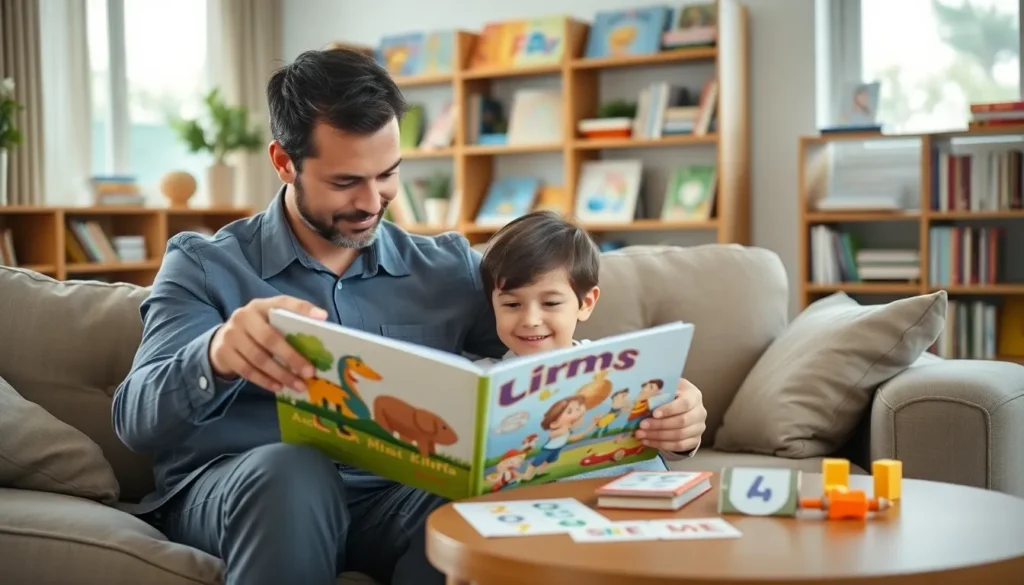
Reading aloud exposes children to new vocabulary, sentence structures, and ideas they wouldn’t encounter on their own. It also associates reading with warmth and connection. Even 15 minutes a day makes a measurable difference in reading and literacy development.
Model Reading
Children copy what they see. When adults read, books, magazines, news articles, children learn that reading matters. Talk about what you’re reading and why you enjoy it.
Limit Screen Time
Excessive screen time competes with reading time. Setting boundaries creates space for books. Some families designate screen-free hours when everyone reads together.
Make Writing Part of Daily Life
Reading and writing develop together. Encourage children to write grocery lists, thank-you notes, or stories. Provide journals, markers, and paper in accessible places.
Celebrate Progress
Positive reinforcement motivates continued effort. Praise specific achievements: “You sounded out that tricky word.” or “You remembered so many details from that story.” Reading and literacy development thrives when children feel successful and supported.