Table of Contents
ToggleChild development tools help parents and caregivers support a child’s physical, cognitive, and emotional growth. These resources range from simple building blocks to interactive learning apps. The right tools can strengthen motor skills, boost language abilities, and encourage problem-solving.
Every child develops at their own pace. But, having the right resources available makes a real difference. This guide covers the main types of child development tools, how to select the best options, and practical ways to use them every day.
Key Takeaways
- Child development tools support physical, cognitive, and emotional growth through resources like building blocks, puzzles, and interactive apps.
- Match tools to your child’s developmental stage—infants need sensory toys, while school-age children benefit from logic games and science kits.
- Open-ended toys like wooden blocks encourage creativity and grow with your child over time.
- Integrate child development tools into daily routines through morning activities, dedicated playtime, outdoor play, and reading sessions.
- Balance digital tools with hands-on play, and prioritize quality, safety-certified materials over cheap alternatives.
- Small, consistent efforts—like 10 minutes of daily reading—compound into significant developmental gains over time.
Understanding the Stages of Child Development
Child development follows a general pattern, though each child moves through stages at their own speed. Knowing these stages helps parents choose age-appropriate child development tools.
Infancy (0–12 months): Babies focus on sensory exploration. They respond to sounds, colors, and textures. High-contrast toys and soft rattles work well during this stage.
Toddlerhood (1–3 years): Children start walking, talking, and exploring independently. They benefit from stacking toys, simple puzzles, and picture books.
Preschool (3–5 years): Kids develop fine motor skills and early literacy. Play-dough, crayons, and alphabet games support this growth.
School Age (6–12 years): Logical thinking and social skills take center stage. Board games, science kits, and creative writing tools become valuable.
Child development tools should match these stages. A toy designed for a five-year-old won’t engage an infant. Likewise, a rattle won’t challenge a school-age child. Matching tools to developmental stages keeps children engaged and learning.
Types of Child Development Tools
Child development tools fall into several categories. Each type targets specific skills. Parents often combine multiple tools to support well-rounded growth.
Physical and Motor Skill Tools
Physical development includes both gross motor skills (large movements like running and jumping) and fine motor skills (small movements like gripping and writing).
Gross motor tools include:
- Tricycles and balance bikes
- Climbing structures and swing sets
- Balls of various sizes
- Jump ropes and hula hoops
Fine motor tools include:
- Building blocks and LEGOs
- Threading beads and lacing cards
- Scissors and craft supplies
- Play-dough and clay
These child development tools strengthen muscles, improve coordination, and build body awareness. Active play also supports brain development, physical movement stimulates neural connections.
Cognitive and Language Development Tools
Cognitive tools sharpen thinking, memory, and problem-solving. Language tools expand vocabulary and communication skills.
Cognitive development tools include:
- Puzzles (from simple shapes to complex jigsaws)
- Memory matching games
- Counting toys and math manipulatives
- Science experiment kits
Language development tools include:
- Picture books and early readers
- Flashcards with words and images
- Storytelling dice and puppets
- Interactive reading apps
Many child development tools combine cognitive and language learning. A picture book about animals teaches new words while introducing concepts like categorization. A puzzle featuring letters reinforces both problem-solving and alphabet recognition.
How to Choose the Right Tools for Your Child
Selecting child development tools requires attention to age, interests, and developmental needs. Not every popular toy suits every child.
Consider age appropriateness. Manufacturers list recommended ages on packaging. These guidelines reflect safety concerns and developmental fit. A puzzle with small pieces poses a choking hazard for toddlers. A toy aimed at toddlers won’t challenge older kids.
Observe your child’s interests. A child fascinated by dinosaurs will engage more with dino-themed learning materials. Interest drives motivation, and motivation drives learning.
Identify developmental gaps. If a child struggles with fine motor skills, prioritize tools like bead threading or building blocks. If speech is delayed, focus on language-rich resources like books and conversation cards.
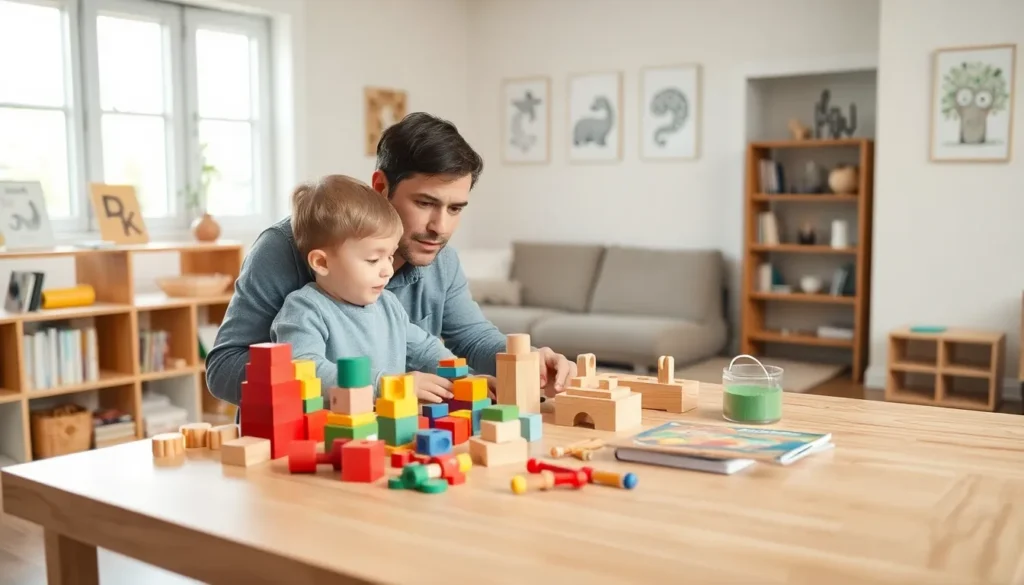
Prioritize open-ended play. The best child development tools allow multiple uses. A set of wooden blocks can become a tower, a train, or a castle. Open-ended toys grow with the child and encourage creativity.
Check for quality and safety. Look for non-toxic materials, sturdy construction, and safety certifications. Cheap toys often break quickly and may contain harmful substances.
Balance screen time. Digital child development tools, apps, educational videos, interactive games, can be valuable. But they shouldn’t replace hands-on play. The American Academy of Pediatrics recommends limiting screen time for young children.
Integrating Development Tools Into Daily Routines
Child development tools work best when they become part of everyday life. Consistent exposure matters more than occasional intensive sessions.
Morning routines: Use dressing and breakfast as learning opportunities. Let children practice buttoning shirts (fine motor) and counting fruit slices (math). Sing songs together to build language skills.
Playtime: Set aside dedicated play periods. Rotate toys every few weeks to maintain interest. Join your child, adult participation increases engagement and learning.
Outdoor time: Physical child development tools thrive outdoors. Ride bikes, kick balls, and climb structures. Nature itself becomes a tool, collecting leaves teaches observation and categorization.
Reading time: Make books a daily habit. Bedtime stories are classic, but any time works. Ask questions about the story to build comprehension. Let older children read aloud to practice fluency.
Limit passive activities. Television and passive tablet use don’t count as developmental activities. Active engagement, touching, moving, creating, responding, drives growth.
Create a prepared environment. Keep child development tools accessible. Low shelves with organized bins let children choose activities independently. An accessible environment encourages exploration and autonomy.
Small, consistent efforts compound over time. Ten minutes of reading daily adds up to over 60 hours per year. Regular puzzle time builds problem-solving habits. Daily outdoor play strengthens muscles gradually.