Table of Contents
ToggleChild development ideas don’t have to be complicated. Parents and caregivers often search for elaborate programs or expensive toys, but the most effective growth activities are surprisingly simple. A cardboard box, a trip to the park, or a conversation during dinner can shape a child’s brain in powerful ways.
Children grow across multiple areas simultaneously, cognitive, social, emotional, and physical. Each area connects to the others. A toddler stacking blocks is building fine motor skills, learning cause and effect, and developing patience all at once. This article breaks down practical, age-appropriate child development ideas that fit into everyday life. No special equipment required.
Key Takeaways
- Effective child development ideas don’t require expensive toys—simple activities like cardboard box play, park visits, and dinner conversations shape growing brains.
- Children develop across four connected areas simultaneously: cognitive, social, emotional, and physical—the best activities target multiple areas at once.
- Age-appropriate cognitive activities range from peek-a-boo for infants to board games and cooking projects for preschoolers.
- Dramatic play and emotion-naming games build essential social-emotional skills by helping children practice empathy and label their feelings.
- Everyday movement like obstacle courses, dance parties, and playdough play develops both gross and fine motor skills without gym classes or organized sports.
- Focus on your child’s overall progress rather than comparing to rigid developmental timelines, as every child moves at their own pace.
Understanding the Key Areas of Child Development
Child development happens across four main areas. Understanding each one helps parents choose activities that support balanced growth.
Cognitive Development refers to how children think, learn, and solve problems. It includes memory, attention, language, and reasoning skills. A child figuring out how puzzle pieces fit together is exercising cognitive muscles.
Social Development covers how children interact with others. They learn to share, cooperate, and read social cues. Playdates and group activities provide natural opportunities for social learning.
Emotional Development involves understanding and managing feelings. Children gradually learn to name their emotions, express them appropriately, and develop empathy for others. This area often overlaps with social development.
Physical Development includes both gross motor skills (running, jumping, climbing) and fine motor skills (drawing, buttoning, cutting). These abilities build the foundation for daily tasks and academic skills like writing.
These four areas don’t develop in isolation. When a child plays tag with friends, they’re running (physical), following rules (cognitive), cooperating (social), and handling the frustration of being caught (emotional). The best child development ideas target multiple areas at once.
Developmental milestones offer general guidelines, but every child moves at their own pace. A two-year-old who isn’t talking much might be ahead in motor skills. Parents should focus on overall progress rather than comparing their child to rigid timelines.
Age-Appropriate Activities for Cognitive Development
Cognitive development ideas should match a child’s current abilities while offering gentle challenges. Here are activities organized by age group.
Infants (0-12 Months)
Babies learn through their senses. Parents can support cognitive development with:
- Peek-a-boo games that teach object permanence
- High-contrast books with bold black and white patterns
- Narrating daily activities to build early language exposure
- Sensory bottles filled with water and glitter or small objects
Simple cause-and-effect toys work well too. A baby who shakes a rattle and hears a sound is making cognitive connections.
Toddlers (1-3 Years)
Toddlers are ready for more interactive child development ideas:
- Shape sorters and stacking toys build problem-solving skills
- Simple matching games strengthen memory
- Pretend play with toy kitchens, dolls, or vehicles develops imagination
- Reading picture books and asking “where’s the dog?” questions
Toddlers also benefit from open-ended questions. Instead of asking “Is that a red ball?” try “What color is that ball?” This encourages active thinking.
Preschoolers (3-5 Years)
Preschoolers can handle more complex cognitive challenges:
- Board games that involve counting, colors, or taking turns
- Scavenger hunts with picture clues or simple written lists
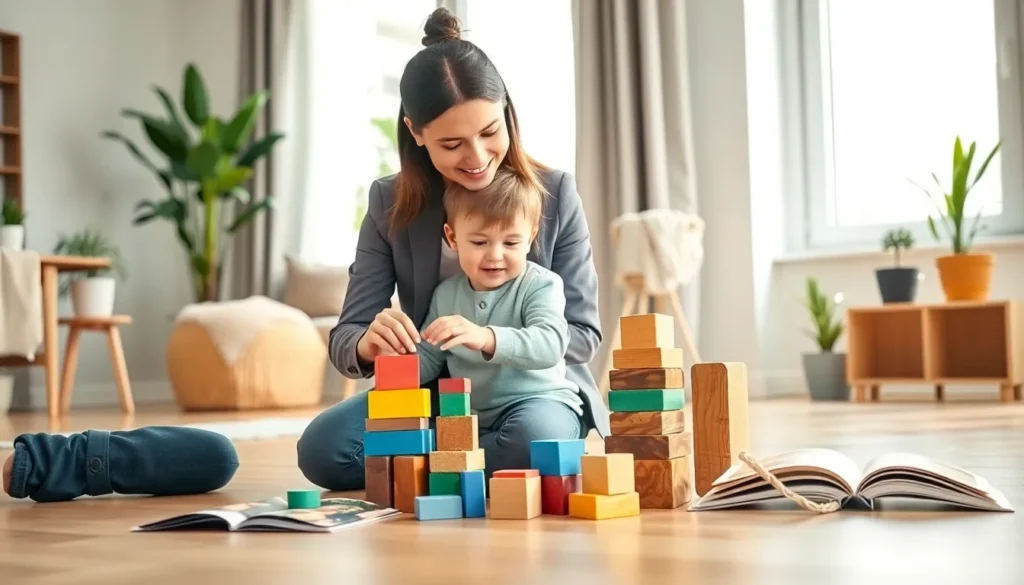
- Building projects with blocks, LEGOs, or recycled materials
- Cooking together to practice measuring, sequencing, and following directions
At this age, children also enjoy “why” questions. Parents can turn these moments into learning opportunities by exploring answers together.
Creative Play Ideas for Social and Emotional Growth
Social and emotional skills determine how well children connect with others and manage their inner world. These child development ideas focus on building both.
Dramatic Play is one of the most effective tools for social-emotional learning. When children pretend to be doctors, teachers, or parents, they practice empathy by stepping into someone else’s shoes. They also negotiate roles with playmates: “You be the patient, I’ll be the doctor.” This requires communication and compromise.
Set up a simple dress-up corner with old clothes, hats, and props. A cardboard box becomes a spaceship, a store, or a vet clinic. The scenarios children create reveal what they’re processing about the world.
Emotion Cards and Games help children name their feelings. Parents can make simple cards with faces showing happy, sad, angry, scared, and surprised expressions. Games might include:
- Sorting cards by emotion
- Acting out feelings for others to guess
- Discussing times when the child felt each emotion
Children who can label their feelings are better equipped to manage them.
Cooperative Games teach teamwork without the stress of competition. Instead of winners and losers, everyone works toward a shared goal. Examples include group puzzles, building a block tower together, or playing “the floor is lava” where everyone helps each other reach safety.
Reading Books About Feelings opens conversations about emotions. Choose stories where characters face challenges, feel frustrated, or work through conflicts. Pause and ask: “How do you think she feels right now? What would you do?”
Playdates and Group Settings provide natural social learning. Children learn to share, wait their turn, and resolve disagreements. Parents shouldn’t rush to fix every conflict, children benefit from working through small disputes themselves.
Physical Development Through Everyday Movement
Physical development doesn’t require expensive gym classes or organized sports. Everyday movement builds strong, coordinated bodies. These child development ideas use simple materials and spaces.
Gross Motor Activities
Gross motor skills involve large muscle groups. Children develop these through:
- Obstacle courses using pillows, chairs, and blankets (climb over, crawl under, jump across)
- Dance parties where children move freely to music
- Ball games including throwing, catching, kicking, and rolling
- Playground time with climbing, swinging, and sliding
- Animal walks where children move like crabs, frogs, bears, or snakes
Outdoor play is especially valuable. Uneven surfaces like grass, sand, and hills challenge balance and coordination in ways flat floors don’t.
Fine Motor Activities
Fine motor skills use small muscles in the hands and fingers. These child development ideas strengthen the same muscles needed for writing:
- Playdough and clay for squeezing, rolling, and shaping
- Threading beads on string or pipe cleaners
- Cutting with safety scissors (start with straight lines, then progress to shapes)
- Drawing, coloring, and painting with various tools
- Building with small blocks or LEGOs
- Pouring and scooping with rice, beans, or water
Even everyday tasks build fine motor skills. Buttoning shirts, zipping jackets, and using utensils all count as practice.
Sensory Integration
Sensory activities help children process information from their environment. Sand play, water tables, finger painting, and playing with different textures all support sensory development. Some children seek sensory input while others avoid it, both responses are normal.
The key is consistent, varied movement throughout the day. Short bursts of activity matter more than occasional long sessions.