Table of Contents
ToggleChild development shapes who children become as adults. From the first smile to the first day of school, each milestone matters. Parents, caregivers, and educators benefit from understanding how children grow physically, mentally, and emotionally. This knowledge helps them provide the right support at the right time.
Every child follows a general pattern of growth, but each one also moves at their own pace. Some children walk at nine months. Others take their first steps closer to fifteen months. Both paths fall within normal ranges. Understanding child development helps adults recognize what to expect and when to seek guidance.
Key Takeaways
- Child development occurs in five key stages—infancy, toddlerhood, early childhood, middle childhood, and adolescence—each building on the previous one.
- Physical milestones like walking and fine motor skills develop at different paces, and most variations fall within normal ranges.
- Talking and reading to children daily significantly boosts vocabulary and cognitive development, with early word exposure linked to stronger literacy skills.
- Responsive parenting and naming emotions help children build secure attachments and develop emotional regulation.
- Consistent routines and clear boundaries provide the structure children need to feel safe and thrive.
- Parents should consult pediatricians if they notice significant developmental delays, as early intervention leads to better outcomes.
The Key Stages of Child Development
Child development occurs in distinct stages. Researchers typically divide these stages into five main periods: infancy, toddlerhood, early childhood, middle childhood, and adolescence.
Infancy (0-12 months) marks the fastest period of growth. Babies develop basic motor skills, form attachments to caregivers, and begin to understand language. By twelve months, most infants can sit independently, crawl, and say a few words.
Toddlerhood (1-3 years) brings rapid language growth and increased mobility. Children learn to walk, run, and climb. They start expressing preferences and testing boundaries. This stage often includes the famous “terrible twos,” though it’s really just children learning independence.
Early childhood (3-6 years) focuses on social skills and imagination. Children learn to play with others, follow rules, and express emotions. Preschool and kindergarten provide structured environments for this growth.
Middle childhood (6-12 years) centers on academic learning and peer relationships. Children develop logical thinking, build friendships, and discover personal interests. Their sense of self becomes more defined during these years.
Adolescence (12-18 years) involves major physical and emotional changes. Teenagers develop abstract thinking, form identity, and prepare for adulthood. Brain development continues well into the mid-twenties, which explains some of the impulsive behavior common in teens.
Each stage of child development builds on the previous one. A strong foundation in early years supports success in later stages.
Physical Development Milestones
Physical development includes both gross motor skills and fine motor skills. Gross motor skills involve large muscle movements like walking and jumping. Fine motor skills involve smaller movements like grasping objects and writing.
Gross Motor Milestones
Most babies hold their heads up by three months. They roll over around four to six months. Sitting without support typically happens between six and eight months. Crawling usually begins between seven and ten months, though some babies skip crawling entirely.
Walking is a major milestone in child development. Most children take their first independent steps between nine and fifteen months. By age two, they can run, kick a ball, and climb stairs with help. By age five, most children can hop, skip, and catch a ball.
Fine Motor Milestones
Fine motor skills develop gradually. Newborns have a reflexive grip. By six months, babies can transfer objects between hands. One-year-olds can pick up small items using their thumb and forefinger.
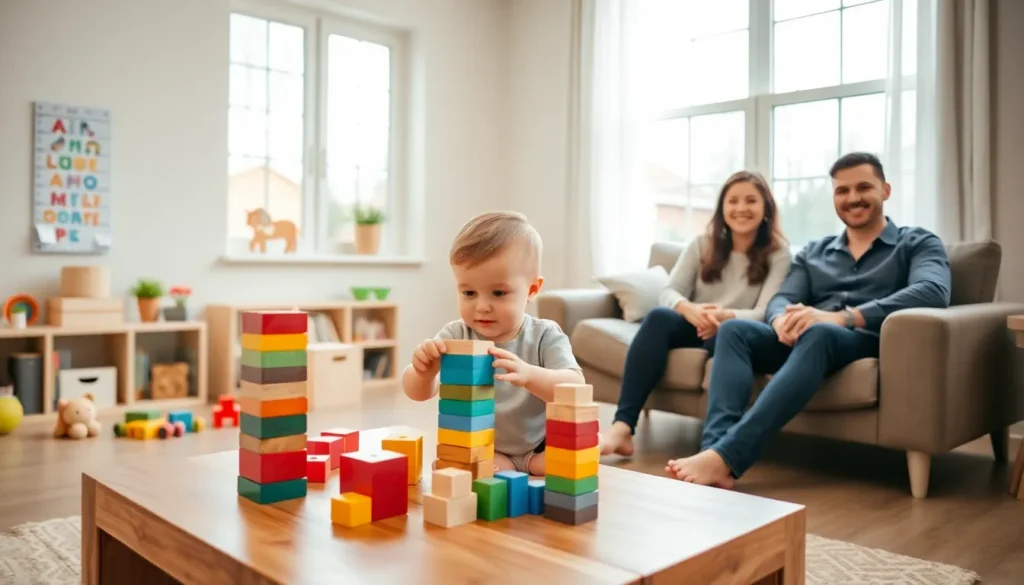
Toddlers learn to stack blocks, scribble with crayons, and turn pages in books. Preschoolers can use scissors, draw simple shapes, and begin writing letters. By age six, most children can tie their shoes and write their name clearly.
Physical development in child development doesn’t happen in isolation. Movement helps brain development. Active play builds neural connections that support learning and memory. This is why physical activity matters so much for young children.
Cognitive and Emotional Growth
Cognitive development refers to how children learn to think, reason, and solve problems. Emotional development involves understanding feelings and building relationships. Both areas play a critical role in child development.
Cognitive Growth by Age
Infants learn through their senses. They watch faces, listen to voices, and explore objects by putting them in their mouths. By age one, most babies understand object permanence, the idea that things exist even when hidden.
Toddlers engage in symbolic thinking. They pretend a block is a phone or a box is a car. This imagination signals important cognitive growth. Language explodes during this period, with vocabulary jumping from about 50 words at eighteen months to over 1,000 words by age three.
Preschoolers ask endless questions. “Why is the sky blue?” “Where do babies come from?” These questions show curiosity and a desire to understand their world. School-age children develop logical reasoning and can solve concrete problems.
Emotional Development
Emotional growth follows patterns too. Infants form attachments to primary caregivers. Secure attachment in infancy predicts better emotional regulation later. Toddlers experience big emotions but lack the skills to manage them. Tantrums are normal and expected.
Preschoolers begin to understand others’ feelings. They show empathy when a friend gets hurt. School-age children develop more complex emotional understanding. They recognize that people can feel multiple emotions at once.
Child development research shows that emotional intelligence matters as much as academic intelligence. Children who understand and manage their emotions perform better in school and form healthier relationships.
How Parents Can Support Healthy Development
Parents and caregivers play the most important role in child development. Simple daily actions make a lasting difference.
Create a Safe and Stimulating Environment
Children need safety to explore. Baby-proofing a home allows infants to move freely without constant “no.” Age-appropriate toys and books encourage learning. Outdoor play provides physical challenges and sensory experiences.
Talk and Read Often
Language exposure drives cognitive development. Parents should talk to babies, even before they can respond. Narrate daily activities: “Now we’re changing your diaper. See the blue blanket?” Reading aloud every day builds vocabulary and literacy skills.
Research shows that children who hear 30 million words by age four have larger vocabularies and stronger reading skills than children who hear fewer words.
Respond to Emotional Needs
Responsive parenting builds secure attachment. When babies cry, picking them up teaches them the world is safe. When toddlers tantrum, staying calm and present helps them learn to regulate emotions.
Naming emotions helps children develop emotional vocabulary. “You seem frustrated that the tower fell down. That’s really annoying.” This simple technique supports child development in powerful ways.
Set Consistent Boundaries
Children thrive with structure. Clear rules and consistent consequences provide security. Routines around bedtime, meals, and daily activities reduce stress for children and parents alike.
Know When to Seek Help
Every child develops at their own pace. But, significant delays may signal the need for evaluation. Pediatricians screen for developmental milestones at regular checkups. Early intervention services help children catch up when delays are identified.