Table of Contents
ToggleMontessori strategies offer a proven framework for helping children learn through hands-on exploration and self-direction. Developed over a century ago by Dr. Maria Montessori, these methods continue to shape classrooms and homes worldwide. Parents and educators use Montessori strategies to foster curiosity, build independence, and support each child’s natural development. This guide breaks down the core principles, practical applications, and age-specific adaptations that make Montessori approaches so effective.
Key Takeaways
- Montessori strategies promote hands-on learning, independence, and self-direction by respecting children as capable individuals.
- A prepared environment with child-sized furniture, natural materials, and minimal clutter allows children to explore and learn independently.
- Practical life activities like pouring, folding, and buttoning build fine motor skills and self-reliance from an early age.
- Montessori materials include built-in error control, enabling children to self-correct without constant adult intervention.
- Effective Montessori strategies adapt to each developmental stage, from safe exploration for infants to meaningful projects for adolescents.
- Observation over intervention allows adults to support children’s natural curiosity while fostering genuine problem-solving skills.
Core Principles Behind Montessori Methods
Montessori strategies rest on a few foundational ideas. Understanding these principles helps caregivers apply the methods with intention and consistency.
Respect for the Child
Montessori education treats children as capable individuals. Adults observe rather than direct. They offer guidance when needed but allow children to make choices, solve problems, and learn from mistakes. This respect builds confidence and intrinsic motivation.
The Absorbent Mind
Dr. Montessori described young children as having “absorbent minds.” They soak up information from their surroundings without conscious effort. Montessori strategies leverage this by creating rich, stimulating environments where learning happens naturally.
Sensitive Periods
Children go through windows of heightened interest in specific skills, language, order, movement, or social interaction. Montessori strategies recognize these sensitive periods and provide appropriate materials and activities during each phase. A toddler fascinated by sorting objects, for example, benefits from activities that channel that interest.
Learning Through Movement
Montessori strategies connect physical activity to cognitive development. Children don’t sit passively. They move, touch, manipulate, and explore. This hands-on approach helps concepts stick. A child learning math might use physical beads to understand quantity before moving to abstract numbers.
Mixed-Age Groupings
Traditional classrooms separate children by age. Montessori environments often group children across a three-year span. Younger children learn from older peers. Older children reinforce their knowledge by teaching. This social structure mirrors real-world communities and builds empathy.
Effective Montessori Strategies for Everyday Use
Montessori strategies work beyond the classroom. Parents and caregivers can apply these techniques at home with minimal preparation.
Creating a Prepared Environment
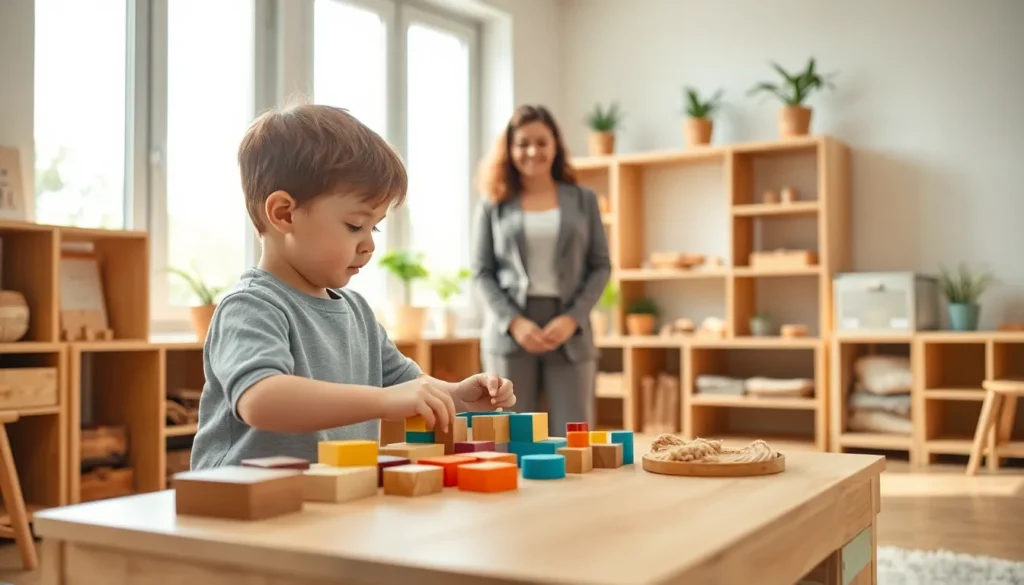
The “prepared environment” is central to Montessori strategies. It means organizing spaces so children can access materials independently and safely.
Child-Sized Furniture and Tools
Low shelves, small chairs, and accessible storage let children choose activities without adult help. In the kitchen, a step stool and child-safe utensils allow participation in meal preparation. These adjustments signal trust and encourage responsibility.
Order and Simplicity
Montessori spaces avoid clutter. Each item has a designated place. Fewer toys, rotated regularly, keep children engaged without overwhelming them. A tidy environment reduces distractions and supports focus.
Natural Materials
Wood, metal, glass, and fabric offer sensory variety. Montessori strategies favor real objects over plastic replicas. A child using a small glass pitcher learns careful handling, and experiences natural consequences if careless.
Beauty and Calm
Montessori environments prioritize aesthetics. Soft colors, natural light, and simple decor create calm spaces. Children respond to beauty. A pleasant environment invites exploration and concentration.
Encouraging Independence and Self-Correction
Montessori strategies emphasize doing for oneself. Adults resist the urge to intervene too quickly.
Practical Life Activities
Pouring water, folding laundry, buttoning shirts, these everyday tasks build fine motor skills and self-reliance. Children gain satisfaction from contributing to household routines. Montessori strategies break complex tasks into small, manageable steps.
Control of Error
Montessori materials often contain built-in feedback. A puzzle piece that doesn’t fit tells the child something is wrong without adult correction. This design lets children self-correct, building problem-solving skills and reducing dependence on external validation.
Freedom Within Limits
Montessori strategies balance freedom with clear boundaries. Children choose their activities but follow established rules. They might select any book from the shelf but must return it before taking another. This structure teaches responsibility while honoring autonomy.
Observation Over Intervention
Adults using Montessori strategies watch before stepping in. They notice what interests a child, where struggles occur, and when help is truly needed. This patience allows children to work through challenges and experience genuine achievement.
Adapting Montessori Strategies for Different Ages
Montessori strategies adjust to developmental stages. What works for a toddler differs from what engages a school-age child.
Infants (0–12 Months)
For infants, Montessori strategies focus on safe exploration. A floor bed allows free movement. Simple, high-contrast objects stimulate developing vision. Caregivers speak clearly and describe actions, building early language connections.
Toddlers (1–3 Years)
Toddlers crave independence. Montessori strategies for this age emphasize practical life skills: dressing, eating, and cleaning up. Low shelves with a few rotating activities keep choices manageable. Toddlers also benefit from large motor activities, climbing, carrying, and pouring.
Preschoolers (3–6 Years)
This stage is prime time for Montessori strategies. Children in this age range have intense focus and curiosity. They respond well to structured materials for math, language, and sensory exploration. Grace and courtesy lessons teach social skills. Longer work periods allow deep concentration.
Elementary Age (6–12 Years)
Older children need intellectual challenges. Montessori strategies at this stage include research projects, collaborative work, and real-world applications. Children might study history by creating timelines or learn fractions through cooking. The emphasis shifts from concrete materials to abstract thinking, though hands-on work remains important.
Adolescents (12+ Years)
Montessori strategies for teenagers focus on community contribution and practical skills. Some Montessori programs include farming, running small businesses, or service projects. Adolescents need purpose and autonomy. Montessori approaches honor their developmental need for meaningful work and social connection.