Table of Contents
ToggleMontessori tips can transform how children learn and grow at home. Maria Montessori developed her educational approach over a century ago, yet her methods remain effective for modern families. Parents don’t need expensive materials or formal training to apply these principles. Simple changes in the home environment and daily routines can foster independence, confidence, and a genuine love of learning. This guide offers practical Montessori tips that any family can start using today.
Key Takeaways
- Create a prepared environment with child-height shelves, open storage, and child-sized furniture so kids can access what they need independently.
- Follow your child’s lead by observing their interests and offering choices rather than directing every activity.
- Include children in practical life activities like cooking, cleaning, and self-care to build independence and fine motor skills.
- Protect 1-2 hours of uninterrupted work time daily to allow deep concentration and creative problem-solving.
- Model respect and patience by speaking at eye level, using calm language, and allowing natural consequences.
- These Montessori tips don’t require expensive materials—simple changes to your home environment and daily routines can foster a genuine love of learning.
Create a Prepared Environment
A prepared environment sits at the core of Montessori philosophy. This concept means organizing spaces so children can access what they need independently. The goal is simple: remove barriers that force kids to rely on adults for basic tasks.
Start by evaluating each room from a child’s perspective. Can they reach their clothes? Can they grab a snack without help? Can they find their toys and put them away?
Here are key Montessori tips for preparing your home:
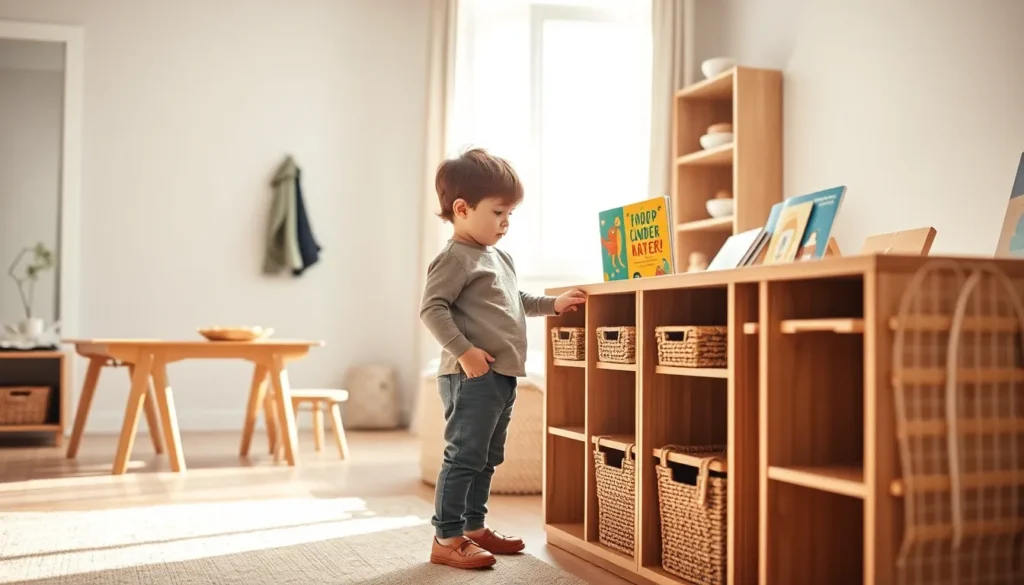
- Lower shelves and hooks: Install coat hooks and shelves at child height. Kids feel capable when they can hang up their own jacket or choose a book without asking.
- Open storage: Use baskets and low shelves instead of closed toy boxes. Children see their options clearly and learn to return items to specific spots.
- Child-sized furniture: A small table and chair in the kitchen or living room gives children their own workspace. They can color, eat snacks, or do puzzles without climbing onto adult furniture.
- Rotating materials: Keep only a few activities available at once. Swap them out every few weeks. This maintains interest and prevents overwhelm.
The prepared environment teaches children that their space belongs to them. They develop responsibility naturally because they can care for their belongings without constant adult intervention. These Montessori tips require some initial effort, but they pay off quickly in daily convenience.
Follow the Child’s Lead
Montessori education respects each child’s unique developmental timeline. Adults observe rather than direct. They watch what captures a child’s attention and build on those interests.
This doesn’t mean letting children run wild. It means paying attention to what they’re naturally drawn toward and providing resources that support that curiosity.
Practical Montessori tips for following the child’s lead include:
- Observe before intervening: Watch your child play for a few minutes before jumping in. Notice what holds their focus. A child stacking blocks repeatedly is learning about balance and spatial relationships.
- Offer choices: Instead of dictating activities, present two or three options. “Would you like to paint or play with clay?” This builds decision-making skills while keeping boundaries reasonable.
- Respect concentration: When a child focuses intently on something, even if it seems boring to adults, avoid interrupting. Deep concentration is valuable and shouldn’t be broken for minor reasons.
- Adjust expectations: Some three-year-olds read early. Others show no interest until age six. Both paths are normal. Montessori tips emphasize meeting children where they are, not where adults think they should be.
Following the child requires patience. Parents may feel tempted to push activities they believe are important. But children learn best when internal motivation drives them. Trust the process.
Encourage Practical Life Activities
Practical life activities form the backbone of Montessori education. These are real tasks that contribute to daily living, cooking, cleaning, dressing, and caring for plants or pets.
Children crave meaningful work. They want to participate in what adults do. Montessori tips capitalize on this desire by including kids in household routines.
Ways to incorporate practical life activities:
- Kitchen involvement: Toddlers can wash vegetables, stir ingredients, and pour liquids. Older children can chop soft foods with child-safe knives, measure ingredients, and follow simple recipes.
- Self-care routines: Set up a low mirror with a hairbrush, toothbrush, and washcloth. Children learn to groom themselves when tools are accessible.
- Cleaning tasks: Kids can wipe tables, sweep with child-sized brooms, fold washcloths, and sort laundry. These activities develop motor skills and teach responsibility.
- Plant and pet care: Watering plants or feeding a fish gives children a sense of purpose. They see direct results from their actions.
Practical life work builds more than independence. It develops fine motor control, concentration, and sequencing skills. A child who pours water from a pitcher practices the same movements needed for writing later. These Montessori tips connect everyday tasks to broader developmental goals.
Expect messes. A child learning to pour will spill. That’s part of the process. Keep a small mop or towel nearby so they can clean up independently too.
Embrace Uninterrupted Work Time
Montessori classrooms protect long blocks of uninterrupted time. Children choose activities and work on them without constant transitions or adult-directed schedules. This approach can be adapted at home.
Modern life pulls attention in many directions. Screens, scheduled activities, and busy family calendars often fragment children’s time. Montessori tips suggest carving out protected periods for independent exploration.
How to create uninterrupted work time at home:
- Block out 1-2 hours: Choose a consistent time each day, perhaps morning before outings or afternoon after rest. During this window, let children direct their own activity.
- Minimize distractions: Turn off screens and reduce background noise. Make the environment calm and inviting.
- Stay nearby but uninvolved: Be available if needed, but don’t hover or suggest activities. Read a book or do quiet tasks nearby.
- Resist the urge to entertain: Children may seem bored initially. This discomfort often leads to creative play. Wait before offering solutions.
Uninterrupted work time allows children to enter deep concentration states. They develop persistence because they have time to struggle with challenges and solve problems independently.
These Montessori tips may feel strange at first. Adults often feel responsible for keeping children busy. But boredom sparks creativity. Children who learn to fill their own time become resourceful thinkers.
Model Respect and Patience
Children absorb how adults treat them and others. Montessori philosophy emphasizes respectful communication and patient guidance. Adults model the behavior they want to see.
This principle shapes daily interactions. How parents respond to mistakes, frustrations, and questions teaches children emotional regulation and social skills.
Montessori tips for modeling respect and patience:
- Speak at eye level: Kneel down to talk with children. This simple act communicates that their perspective matters.
- Use calm, clear language: Avoid shouting or lengthy explanations. State expectations simply: “We walk inside” instead of “Stop running. How many times do I have to tell you?”
- Allow natural consequences: When safe, let children experience the results of their choices. A child who forgets a jacket feels cold. This teaches cause and effect better than lectures.
- Apologize when wrong: Adults make mistakes too. Saying “I’m sorry I raised my voice” shows children that everyone can improve.
- Give time to respond: After asking a question, wait. Children process slower than adults. Rushing them communicates impatience.
Respect doesn’t mean permissiveness. Montessori environments have clear boundaries. But those boundaries are enforced with dignity, not shame. Children cooperate more readily when they feel respected.
These Montessori tips require self-awareness from adults. Parenting under stress makes patience difficult. But small improvements compound over time.