Table of Contents
ToggleMontessori tools form the foundation of a learning approach that puts children in control of their education. These carefully designed materials help kids develop independence, concentration, and practical skills through hands-on exploration. Whether parents are setting up a home learning space or teachers are stocking a classroom, understanding Montessori tools makes all the difference.
This guide covers what Montessori tools are, the main categories of materials, how to select the right ones, and tips for creating a Montessori-friendly environment at home. By the end, readers will have a clear roadmap for choosing materials that support child-led learning.
Key Takeaways
- Montessori tools are hands-on, self-correcting learning materials made from natural materials like wood, glass, and metal to support independent learning.
- Practical life tools (pouring sets, dressing frames, cleaning supplies) and sensorial materials (Pink Tower, color tablets) form the foundation of Montessori education.
- Observe your child’s interests and developmental readiness before selecting Montessori tools—matching materials to their stage prevents frustration.
- Prioritize quality over quantity; a few well-made Montessori tools outperform a cluttered shelf of cheap alternatives.
- Set up a child-accessible space with low shelves, rotate 5–8 activities at a time, and keep the environment simple and organized.
- Adults should act as guides rather than directors—prepare the environment, observe, and allow children to learn at their own pace.
What Are Montessori Tools?
Montessori tools are hands-on learning materials developed by Dr. Maria Montessori in the early 1900s. She observed that children learn best when they can touch, manipulate, and explore objects at their own pace. These tools aren’t toys, they’re purposefully designed to teach specific concepts and skills.
What sets Montessori tools apart from traditional educational materials? A few key features:
- Self-correcting design: Most Montessori materials show children when they’ve made an error without adult intervention. A puzzle piece that doesn’t fit, for example, signals a mistake immediately.
- Real materials: Montessori tools use wood, glass, and metal rather than plastic. Children learn to handle real objects carefully.
- Isolation of concepts: Each tool focuses on one skill or concept at a time. This clarity helps children master ideas without confusion.
- Child-sized proportions: Everything from furniture to utensils fits small hands and bodies.
Montessori tools serve children from infancy through adolescence. Infant mobiles, toddler practical life materials, and elementary math manipulatives all fall under this umbrella. The common thread is respect for the child’s natural development and curiosity.
These materials encourage what Montessori called “normalized” behavior, children who are calm, focused, and engaged. When kids work with well-designed Montessori tools, they often enter a state of deep concentration that supports learning and emotional regulation.
Key Categories of Montessori Materials
Montessori tools fall into several distinct categories. Each addresses different developmental needs and learning goals. Two of the most foundational categories are practical life tools and sensorial materials.
Practical Life Tools
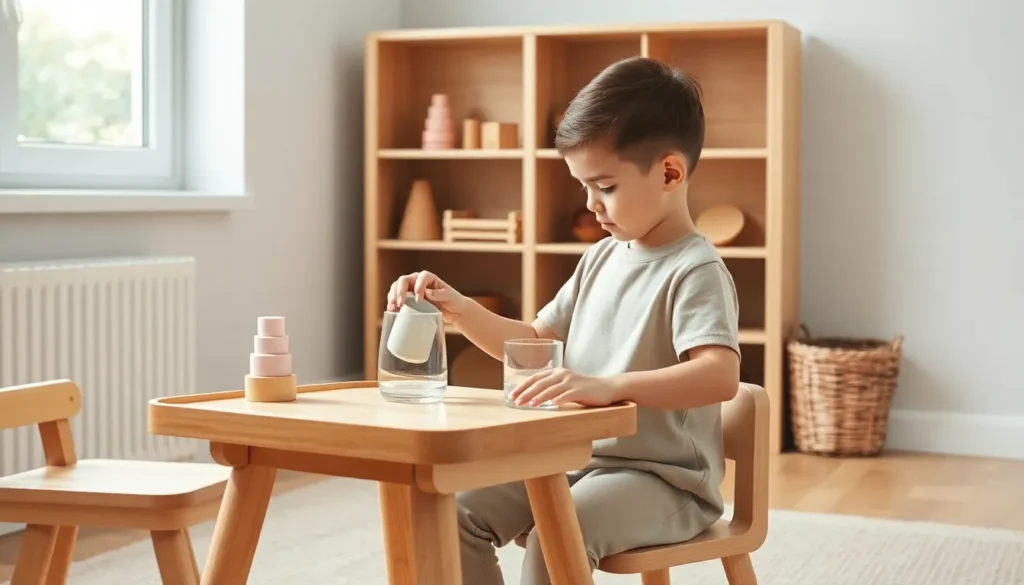
Practical life tools help children master everyday tasks. These Montessori tools build independence, fine motor control, and concentration. They also give kids a sense of accomplishment, there’s real satisfaction in pouring water without spilling.
Common practical life tools include:
- Pouring sets: Pitchers and cups for transferring water or dry materials like rice
- Dressing frames: Wooden frames with buttons, zippers, snaps, or laces to practice clothing skills
- Child-sized cleaning supplies: Small brooms, dustpans, mops, and spray bottles
- Food preparation tools: Butter knives, cutting boards, and peelers for real cooking tasks
- Care of self materials: Handwashing stations, toothbrushing setups, and grooming tools
Practical life activities often look like chores, and they are. But that’s the point. Children want to participate in real life. When adults give them the right Montessori tools, kids develop skills they’ll use forever.
Sensorial Materials
Sensorial materials sharpen children’s senses and help them categorize the world around them. These Montessori tools isolate qualities like size, color, weight, texture, sound, and smell.
Classic sensorial materials include:
- Pink Tower: Ten graduated pink cubes that teach size discrimination
- Brown Stair: Rectangular prisms that vary in width
- Color tablets: Graded color swatches for matching and sequencing
- Sound cylinders: Pairs of cylinders with materials inside that make different sounds
- Geometric solids: Wooden spheres, cones, pyramids, and cubes for tactile exploration
- Fabric boxes: Squares of different textures for blindfolded matching activities
Sensorial Montessori tools prepare children for later academic work. The Pink Tower, for instance, introduces concepts that support math learning. Color tablets develop the visual discrimination needed for reading.
How to Choose the Right Montessori Tools
Selecting Montessori tools requires attention to a child’s age, interests, and developmental stage. Not every material suits every child, and more isn’t always better.
Start with observation. Watch what the child gravitates toward. Does she spend time trying to open containers? Consider lock boxes or twist-and-open activities. Is he fascinated by colors? Color tablets might be a good fit.
Match materials to readiness. Montessori tools follow a sequence. Pouring dry materials comes before pouring liquids. Simple puzzles precede complex ones. Jumping ahead frustrates children: starting too low bores them.
Prioritize quality over quantity. Authentic Montessori tools cost more than generic versions, but they last longer and work better. A well-made Pink Tower stays square and stacks precisely. Cheap knockoffs wobble and frustrate. That said, parents don’t need to buy everything at once. A few well-chosen Montessori tools beat a cluttered shelf of mediocre options.
Consider durability and safety. Look for natural materials like solid wood, metal, and glass. These teach children to handle objects with care. Avoid flimsy plastic alternatives that break easily or feel cheap.
Think about presentation. Montessori tools should sit on low, open shelves where children can access them independently. Each material needs its own tray or basket. This organization invites use and makes cleanup simple.
Budget constraints are real. Parents can start with DIY practical life activities using household items, a small pitcher, a sponge, a child-sized apron. These cost little but deliver genuine Montessori benefits.
Setting Up a Montessori Environment at Home
A Montessori environment extends beyond the materials themselves. The physical space matters just as much as the Montessori tools on the shelves.
Create child-accessible spaces. Low shelves, hooks at child height, and step stools transform a home. When children can reach their Montessori tools, clothing, and snacks independently, they develop confidence and self-reliance.
Keep it simple. Cluttered spaces overwhelm children. Display only a few Montessori tools at a time, typically five to eight activities per shelf. Rotate materials every few weeks to maintain interest without buying new items constantly.
Designate work areas. Children need defined spaces for activities. Small tables and chairs, floor mats, or designated kitchen counters tell kids where learning happens. This structure helps them focus.
Use natural materials throughout. Wood, cotton, wool, and metal create a calm aesthetic. They also connect children to the natural world and teach them to care for quality items.
Involve children in maintenance. Montessori tools require care. Children learn to return materials to shelves, wipe up spills, and report broken items. This responsibility is part of the learning process.
A home Montessori setup doesn’t require a dedicated room or expensive furniture. A corner of a living room works fine. The key is consistency, Montessori tools stay in the same spots, and children know the expectations for using them.
Prepare the adult, too. Parents and caregivers need patience. Montessori learning takes time. Children repeat activities many times before mastering them. Adults serve as guides, not directors. Their job is to observe, prepare the environment, and step back.