Table of Contents
ToggleMontessori ideas offer parents a proven framework for raising confident, self-directed learners. Dr. Maria Montessori developed her educational approach over a century ago, yet her methods remain highly effective today. Children learn best when they can explore at their own pace, make choices, and engage with hands-on materials. Parents don’t need expensive tools or formal training to bring these principles home. A few thoughtful changes to the environment, daily routines, and activity choices can make a significant difference. This guide covers practical Montessori ideas that work for families with children of various ages.
Key Takeaways
- Montessori ideas focus on respecting children as individuals and allowing them to lead their own learning through hands-on exploration.
- Create a child-friendly environment with low shelves, organized materials, and items at child height to encourage independence.
- Practical life activities like pouring, sorting, and cleaning build confidence and motor skills in children of all ages.
- Daily routines—morning, mealtime, and bedtime—offer natural opportunities to practice Montessori ideas without special equipment.
- Parents don’t need certification or expensive tools to implement Montessori principles at home effectively.
- Step back and give children time to problem-solve on their own, offering guidance only when they truly need it.
Understanding the Montessori Philosophy
The Montessori philosophy centers on respect for the child as an individual. Dr. Maria Montessori observed that children have natural drives to learn and develop skills. Adults serve as guides rather than instructors. They prepare environments and offer support, but children lead their own learning.
Several key principles define Montessori ideas:
- Follow the child. Watch what interests a child and provide activities that match those interests.
- Hands-on learning. Children understand concepts better when they can touch, move, and manipulate objects.
- Freedom within limits. Children choose their activities but work within clear boundaries.
- Mixed-age groupings. Younger children learn from older peers, while older children reinforce skills by teaching.
- Uninterrupted work periods. Children need extended time to concentrate deeply on tasks.
Montessori education values the process over the product. A child who spends 30 minutes pouring water between containers is building concentration, motor control, and problem-solving skills. The goal isn’t a perfect result, it’s the learning that happens along the way.
Parents often worry they need certification to apply Montessori ideas at home. They don’t. Understanding these basic principles gives any parent a solid foundation. The philosophy adapts well to different family situations, budgets, and living spaces.
Setting Up a Montessori-Inspired Environment
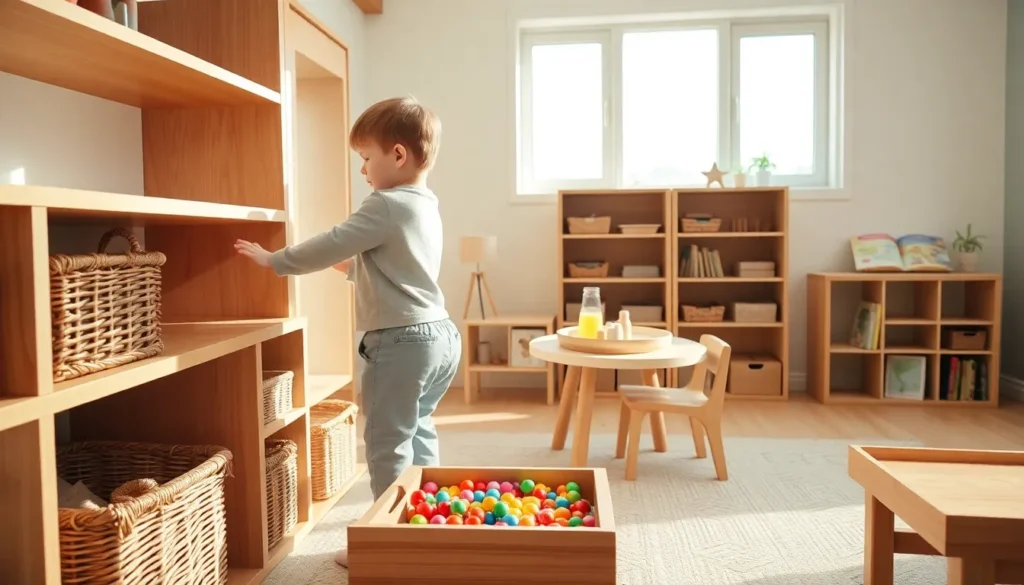
A Montessori-inspired environment puts children in control. Everything sits at child height, allowing independent access. This setup sends a clear message: “You can do this yourself.”
Start with furniture. Low shelves work better than toy boxes. Children see all their options and can choose activities without adult help. Rotating materials keeps things fresh, store some items away and swap them out every few weeks.
Organize materials in simple categories:
- Practical life (pouring, sorting, cleaning tools)
- Sensorial (puzzles, texture boards, color-matching games)
- Language (books, letter cards, writing materials)
- Math (counting beads, number cards, measuring cups)
- Art and creativity (crayons, paper, child-safe scissors)
Each activity should have its own tray or basket. This organization helps children complete tasks independently and return materials to their proper places.
Montessori ideas emphasize beauty and order. Choose natural materials like wood, metal, and fabric over plastic when possible. Keep spaces uncluttered. A calm environment helps children focus.
The kitchen offers excellent opportunities. A learning tower lets children participate in meal preparation safely. A low drawer stocked with child-sized utensils, plates, and cups allows them to set the table or get their own snacks.
Bathrooms benefit from step stools, towel hooks at child height, and small baskets with toiletries children can reach. These simple changes promote self-care skills.
Age-Appropriate Montessori Activities
Montessori ideas adapt to different developmental stages. Activities should challenge children just enough, not too easy, not frustrating.
Infants and Toddlers (0–3 Years)
Young children explore through their senses. Offer high-contrast images, textured balls, and simple grasping toys. As they grow, introduce:
- Object permanence boxes
- Stacking rings
- Simple puzzles with knobs
- Pouring dry materials like rice or beans
- Matching socks or sorting laundry by color
Toddlers love practical life activities. They can wipe tables, water plants, and put dirty clothes in a hamper. These tasks build confidence and motor skills.
Preschoolers (3–6 Years)
This age group thrives with more complex Montessori ideas. Children develop fine motor control and logical thinking. Effective activities include:
- Threading beads or pasta onto string
- Cutting with child-safe scissors
- Washing dishes in a small basin
- Counting objects and matching them to numerals
- Letter tracing in sand or salt trays
- Sorting objects by size, color, or shape
Preschoolers can also help with cooking tasks like stirring, spreading, and measuring ingredients.
Early Elementary (6–9 Years)
Older children enjoy activities that connect to the wider world. Montessori ideas for this age include:
- Planning and preparing simple meals
- Managing small budgets for shopping
- Research projects on topics they choose
- Geography puzzles and map work
- Simple science experiments
- Writing letters or keeping journals
Children at this stage can handle more responsibility. They might care for pets, organize their own spaces, or help younger siblings with activities.
Encouraging Independence Through Daily Routines
Daily routines provide perfect opportunities for Montessori ideas. Morning, mealtime, and bedtime all offer chances for children to practice independence.
Morning routines can include:
- Choosing clothes from a limited selection
- Dressing without help (start with easy items)
- Making the bed (even imperfectly)
- Preparing simple breakfast items
Set children up for success by organizing closets and drawers so they can reach everything. Picture labels help younger children find what they need.
Mealtimes teach many skills. Children can:
- Set their own place at the table
- Serve themselves from small pitchers and bowls
- Cut soft foods with butter knives
- Clear their dishes after eating
- Wipe up spills independently
Expect messes. They’re part of learning. Keep cleaning supplies accessible so children can handle accidents themselves.
Bedtime routines build self-care habits:
- Brushing teeth with minimal supervision
- Choosing and putting on pajamas
- Selecting books for bedtime reading
- Tidying up toys before sleep
Montessori ideas work best when adults step back. Resist the urge to jump in and help. Wait. Give children time to problem-solve. Offer guidance only when they ask or become truly stuck.
Patience matters enormously. Tasks take longer when children do them. But each successful attempt builds their confidence and skill. A child who buttons their own shirt today will tackle harder challenges tomorrow.