Table of Contents
ToggleFinding the best Montessori program for a child can feel overwhelming. Hundreds of schools claim to follow Dr. Maria Montessori’s educational philosophy, but quality varies widely. Some programs deliver authentic, child-centered learning experiences. Others use the Montessori name without following its core principles.
This guide breaks down what separates excellent Montessori programs from average ones. Parents will learn which features matter most, how different age groups benefit from this approach, and practical steps for comparing options. The goal is simple: help families make an well-informed choice that supports their child’s growth and curiosity.
Key Takeaways
- The best Montessori programs feature hands-on learning, mixed-age classrooms, and uninterrupted three-hour work periods that build deep concentration.
- Look for schools with AMI or AMS accreditation and teachers who hold rigorous Montessori certifications.
- Authentic Montessori classrooms have child-sized furniture, accessible shelves, and purposeful learning materials like bead chains and sandpaper letters.
- Visit classrooms during active learning time to observe student engagement and how guides interact with children.
- The best Montessori education offers continuity from infancy through adolescence, with children who stay through elementary often showing the strongest outcomes.
- Compare tuition costs carefully—some excellent Montessori programs operate as public magnet schools or charters at no cost.
What Makes a Montessori Program Stand Out
The best Montessori programs share several defining characteristics. They prioritize hands-on learning, mixed-age classrooms, and self-directed activity. Children choose their work from a range of options the teacher prepares. This structure builds independence and intrinsic motivation.
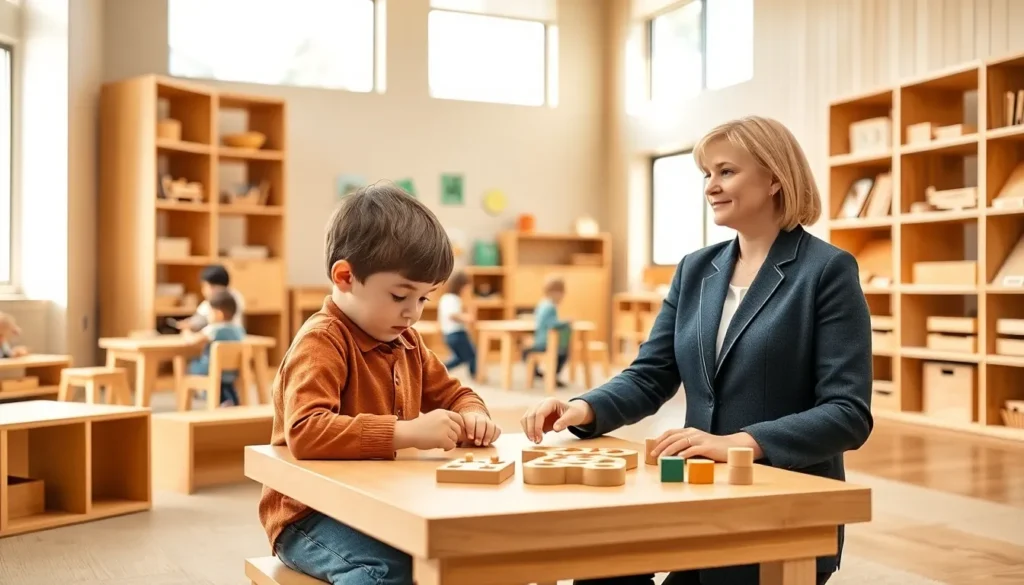
Authentic Montessori classrooms look different from traditional ones. Students don’t sit at desks facing a teacher. Instead, they move freely through the space, working individually or in small groups. Materials sit on low, accessible shelves. The environment itself teaches.
Teacher training matters enormously. The best Montessori schools employ guides with credentials from AMI (Association Montessori Internationale) or AMS (American Montessori Society). These certifications require extensive coursework and supervised practice. A trained Montessori guide knows how to observe children, introduce materials at the right moment, and step back when learners need space.
Another standout quality? Uninterrupted work periods. Strong Montessori programs protect blocks of time, typically three hours, where children can engage deeply with activities. This extended focus builds concentration skills that benefit students for years.
Finally, the best Montessori environments feel calm and purposeful. Children speak in quiet voices. They return materials to shelves when finished. They help younger classmates. This isn’t coincidence, it reflects careful design and consistent expectations.
Key Features to Look for in Top Montessori Schools
When evaluating Montessori schools, certain features signal quality. Here’s what parents should prioritize:
Accreditation and Teacher Credentials
Look for schools accredited by AMI, AMS, or similar organizations. Accreditation means the program meets specific standards for curriculum, materials, and teacher qualifications. Ask about lead teachers’ training backgrounds. The best Montessori classrooms have guides who completed rigorous certification programs.
Prepared Environment
Walk through the classroom. Do you see child-sized furniture? Are materials organized and accessible? Quality Montessori schools invest in authentic learning materials, wooden geometric shapes, bead chains for math, sandpaper letters for reading. These aren’t decorations. They’re essential tools.
Mixed-Age Groupings
True Montessori classrooms group children across a three-year age span. A primary classroom might include kids ages 3 to 6. This structure allows younger students to learn from older peers. Older children reinforce their knowledge by teaching. Both groups benefit.
Low Student-to-Teacher Ratios
The best Montessori programs maintain manageable class sizes. While Montessori classrooms can be larger than traditional ones (24-30 students isn’t unusual), they require adequate adult support. Look for at least one trained lead guide plus an assistant.
Parent Communication
Strong Montessori schools keep families informed. They offer regular conferences, classroom observations, and clear explanations of the curriculum. Parents should understand what their child is learning and why.
Age-Appropriate Montessori Programs
Montessori education serves children from infancy through adolescence. Each level addresses specific developmental needs.
Infant and Toddler Programs (Birth to Age 3)
These programs focus on sensory exploration and movement. Babies and toddlers develop trust, independence, and language skills. The best Montessori infant programs provide safe spaces for crawling, pulling up, and early walking. Caregivers follow each child’s pace rather than pushing milestones.
Primary/Children’s House (Ages 3-6)
This is the most common Montessori level. Children learn practical life skills (pouring, buttoning, sweeping), sensory discrimination, early math, language, and cultural studies. The best Montessori primary classrooms include all five curriculum areas with complete material sets. Children typically stay with the same guide for three years.
Elementary (Ages 6-12)
Elementary Montessori programs expand into abstract thinking, research projects, and collaborative work. Students explore history, science, geography, and advanced math through interconnected lessons. The best Montessori elementary programs encourage going-out experiences, field trips students help plan themselves.
Adolescent Programs (Ages 12-15)
Fewer schools offer this level, but authentic programs exist. They often include land-based learning, practical work, and community engagement. Adolescents need real responsibility, and quality Montessori programs provide it.
When choosing a Montessori school, consider whether the program covers all developmental stages or just some. Continuity matters. Children who stay in Montessori education through elementary often show the strongest outcomes.
How to Evaluate and Compare Montessori Options
Comparing Montessori schools requires more than reading websites. Parents should visit classrooms, ask specific questions, and trust their observations.
Schedule Visits During Class Time
Seeing a Montessori classroom in action reveals more than any tour. Watch how children interact with materials. Notice whether they seem engaged or restless. Observe the guide’s role, does she interrupt frequently, or does she step back and let children work?
Ask Pointed Questions
Good questions include:
- What percentage of the day involves uninterrupted work time?
- Where did your lead teachers receive Montessori training?
- How do you handle discipline and conflict resolution?
- What happens when a child finishes the three-year cycle?
The answers tell parents a lot. The best Montessori programs welcome these questions and answer them directly.
Compare Costs and Value
Montessori schools vary widely in tuition. Higher cost doesn’t always mean better quality. Compare what’s included, materials fees, lunch, extended care. Some excellent Montessori programs operate as public magnet schools or charters, offering the method tuition-free.
Check References
Talk to current parents. Ask about their child’s experience, communication from the school, and any concerns. Happy families speak enthusiastically about the best Montessori programs. Hesitation or vague answers may signal problems.
Trust Your Instincts
After visits and research, parents usually have a gut feeling. The best Montessori school for one family might not suit another. Consider the commute, the community, and whether the school’s values align with the family’s priorities.