Table of Contents
ToggleReading and literacy development ideas matter more than ever in today’s information-rich world. Children who build strong reading skills early gain advantages that last a lifetime. They perform better academically, think more critically, and communicate with greater confidence.
The good news? Parents and caregivers can make a real difference. Simple, consistent practices at home support what children learn in school. This article covers practical strategies for creating reading-friendly spaces, choosing age-appropriate activities, and building lasting literacy habits. Whether a child is just learning the alphabet or already reading chapter books, these ideas help foster growth at every stage.
Key Takeaways
- Create a print-rich home environment with accessible books, labeled objects, and writing materials to naturally boost early literacy skills.
- Match reading and literacy development ideas to your child’s age—toddlers thrive with songs and sensory play, while beginning readers benefit from phonics games and series books.
- Read aloud daily for at least 15-20 minutes and ask open-ended questions to build both vocabulary and comprehension.
- Let children choose their own reading materials, including comics and nonfiction, to increase engagement and foster a genuine love of books.
- Model reading behavior yourself—children who see adults enjoying books are more likely to become lifelong readers.
- Celebrate reading milestones and keep books associated with positive experiences, never using reading as punishment.
Creating a Print-Rich Environment at Home
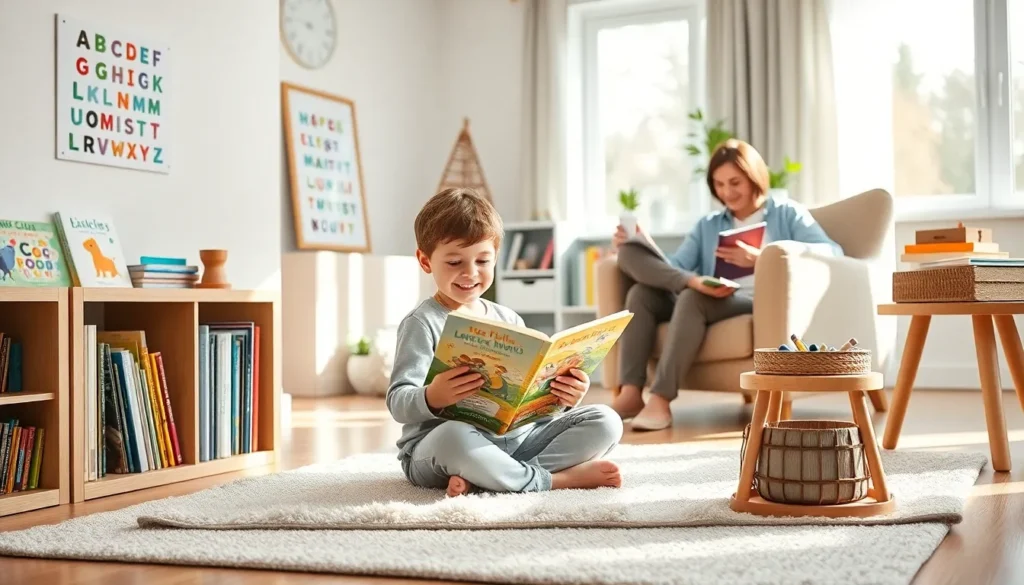
A print-rich environment surrounds children with words in meaningful ways. This exposure builds familiarity with letters, sounds, and the purpose of reading. Setting up such an environment doesn’t require expensive materials or major renovations.
Stock a Home Library
Every home benefits from a collection of books children can access freely. A low shelf or basket in a common area works well. Include board books, picture books, and early readers based on the child’s age and interests. Rotating books every few weeks keeps the selection fresh and exciting.
Label Everyday Objects
Simple labels on household items, door, chair, window, refrigerator, help children connect written words with real objects. This technique reinforces vocabulary and makes reading feel natural. Handwritten labels work just as well as printed ones.
Display Print Everywhere
Hang alphabet posters in bedrooms. Put up a family message board in the kitchen. Post the week’s schedule where kids can see it. These small additions normalize reading as part of daily life.
Include Writing Materials
Reading and writing develop together. Keep crayons, markers, paper, and pencils available. When children see adults writing grocery lists or notes, they want to participate. This interest supports literacy development naturally.
Research from the National Institute for Literacy shows that children in print-rich homes typically enter school with stronger pre-reading skills. The investment pays off.
Age-Appropriate Reading Activities
Different ages call for different approaches to reading and literacy development ideas. What engages a toddler won’t challenge a second-grader. Matching activities to developmental stages keeps children interested and progressing.
For Early Learners (Ages 2-5)
Young children learn through play, repetition, and sensory experiences. Reading activities at this stage should feel like fun, not lessons.
Read Aloud Daily
Read-alouds form the foundation of early literacy. Aim for at least 15-20 minutes each day. Use animated voices for different characters. Point to pictures and ask simple questions like “Where’s the dog?” or “What color is the ball?”
Sing Songs and Nursery Rhymes
Rhyming builds phonemic awareness, the ability to hear and manipulate sounds in words. Songs like “Twinkle, Twinkle” and “The Itsy Bitsy Spider” teach rhythm and language patterns. Children often memorize these before they can read, which builds confidence.
Play with Letters
Magnetic letters on the refrigerator, alphabet puzzles, and letter-shaped bath toys make learning tactile. Let children trace letters in sand, shaving cream, or finger paint. This multi-sensory approach helps cement letter recognition.
Tell Stories Together
Wordless picture books invite children to create their own narratives. Ask them to describe what they see happening. This practice builds comprehension and oral language skills.
For Beginning Readers (Ages 5-8)
Once children start decoding words, activities can become more structured while still remaining enjoyable.
Practice Phonics Through Games
Board games like Zingo and Scrabble Junior make phonics practice engaging. Word family games (cat, bat, hat, sat) help children recognize patterns. Apps designed for early readers can supplement hands-on activities.
Establish a Reading Routine
Consistent daily reading time builds habits. Many families find success with 20 minutes of independent reading before bed. Some children prefer reading after school. The specific time matters less than the consistency.
Visit the Library Regularly
Library trips let children choose books based on their interests. Librarians can recommend titles at appropriate reading levels. Summer reading programs add extra motivation and rewards.
Read Series Books
Series like Elephant & Piggie, Magic Tree House, and Dog Man hook young readers. When children care about characters, they want to keep reading. This intrinsic motivation accelerates progress.
Building Vocabulary and Comprehension Skills
Reading words on a page is only part of literacy. Strong readers also understand what they read and possess rich vocabularies to make sense of new texts.
Talk About Books
Conversations about stories deepen comprehension. Ask open-ended questions: “Why do you think the character did that?” or “What might happen next?” Avoid questions with simple yes/no answers. These discussions teach children to think critically about what they read.
Introduce New Words Intentionally
Children learn most vocabulary through context, but direct instruction helps too. When reading together, pause at unfamiliar words. Explain meanings simply. Use new words in conversation over the following days to reinforce learning.
Connect Reading to Real Experiences
A book about the ocean means more after a trip to the beach. A story about cooking becomes richer when children help in the kitchen. These connections make abstract concepts concrete and memorable.
Encourage Retelling
Ask children to summarize what they’ve read. This practice checks comprehension and builds narrative skills. Start with simple questions: “What happened at the beginning? The middle? The end?”
Use Graphic Organizers
For older children, story maps and character charts organize information visually. These tools help readers track plot elements and understand story structure. They’re especially useful for longer chapter books.
Vocabulary research suggests that children need multiple exposures to a word, sometimes 12 or more, before it becomes part of their active vocabulary. Repetition through reading and conversation makes this happen naturally.
Encouraging a Lifelong Love of Reading
Skills matter, but attitude matters just as much. Children who love reading practice more, which builds stronger skills. This positive cycle starts with how adults frame reading experiences.
Model Reading Behavior
Children imitate what they see. When parents read books, magazines, or newspapers, kids notice. Share what you’re reading. Express enthusiasm about a great story or interesting article. This models reading as a valuable, enjoyable activity.
Respect Reading Preferences
Not every child loves fiction. Some prefer nonfiction about dinosaurs, space, or sports. Comic books and graphic novels count as reading too. Letting children choose their own materials increases engagement. The “right” book is the one they want to read.
Never Use Reading as Punishment
Assigning extra reading as discipline backfires. It frames books as unpleasant. Similarly, withholding reading time as punishment sends the wrong message. Keep reading associated with positive experiences.
Celebrate Progress
Acknowledge milestones without making them feel like tests. Finishing a first chapter book deserves recognition. So does learning a tricky word or reading independently for longer stretches. Small celebrations maintain motivation.
Make Reading Social
Book clubs for kids create community around reading. Family read-alouds work for all ages, even teenagers enjoy being read to. Discussing books with friends or siblings adds a social dimension that many children crave.
The goal isn’t producing perfect readers. It’s raising people who turn to books throughout their lives, for information, entertainment, comfort, and growth.